If you’ve ever installed a tree swing and thought, “Is this too high… or too low?”—you’re not alone. This is one of those deceptively simple decisions that can make or break the entire experience.
I’ve seen swings set so low your feet drag trenches in the dirt, and others so high they feel like launching off a cliff. The sweet spot is surprisingly consistent once you understand the variables.
Let’s break it down so you can get it right the first time.
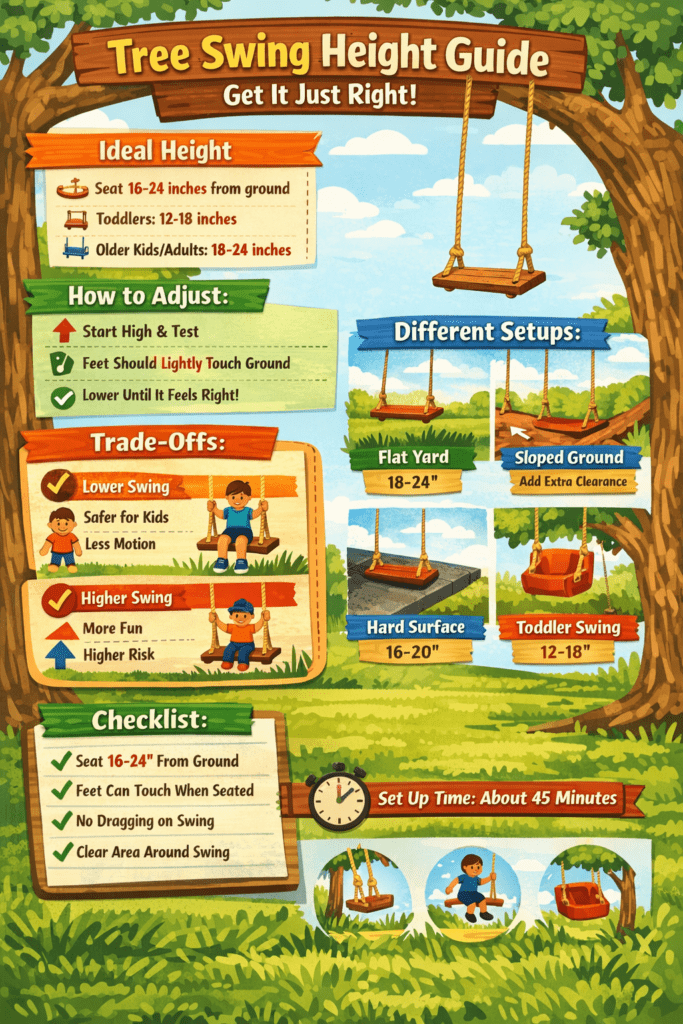
The Ideal Tree Swing Height (Quick Answer)
For most setups:
- Seat height: 16–24 inches off the ground
- Toddler swings: 12–18 inches
- Older kids/adults: 18–24 inches
That’s your baseline. But don’t stop there—this number changes depending on terrain, swing type, and how you actually plan to use it.
Why Height Matters More Than You Think
Getting the height right isn’t just about comfort—it directly affects:
- Safety (fall distance + impact)
- Swing motion (arc and momentum)
- Ease of use (getting on/off)
- Ground wear (dragging vs clearance)
Too low, and the swing feels sluggish and awkward. Too high, and you introduce unnecessary risk—especially for kids jumping on and off.
How I Actually Set the Height (Real-World Approach)
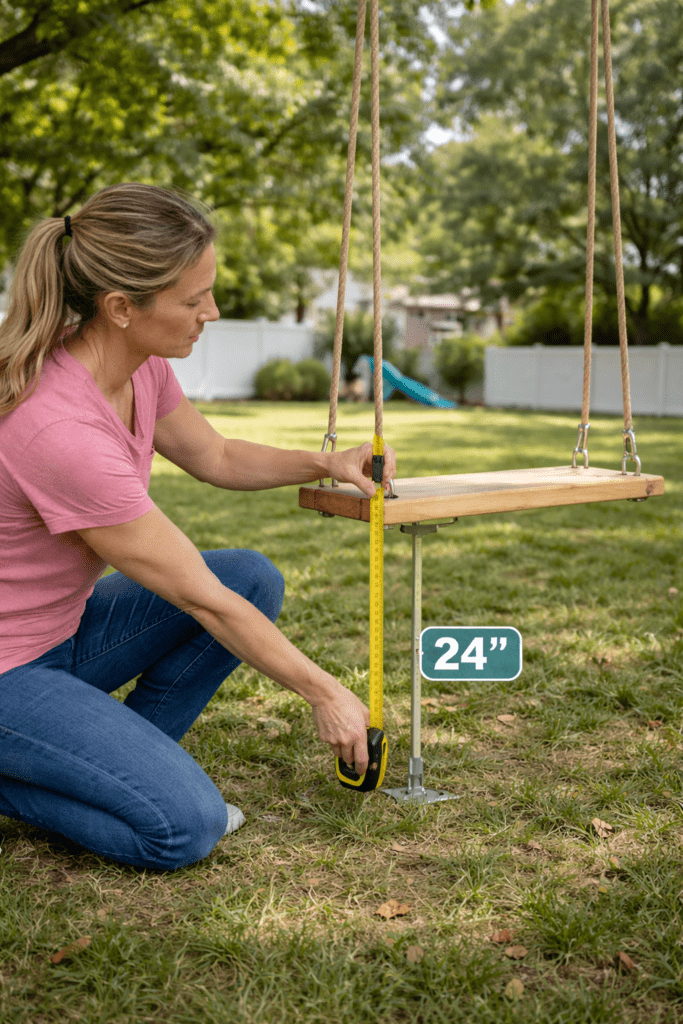
Here’s the method that consistently works:
Step 1: Start Higher Than You Think
Hang the swing so the seat sits around 24–30 inches off the ground.
Step 2: Test It
Sit on it. Let your legs hang naturally.
Step 3: Adjust Down
Lower it until:
- Your feet can lightly touch the ground
- You can push off easily
- You’re not scraping during motion
This “feet brushing the ground” test is the fastest way to dial it in.
Adjusting for Different Situations
1. Flat Grass Yard (Ideal Setup)
- Stick to 18–24 inches
- Grass provides a softer landing
- Minimal adjustment needed
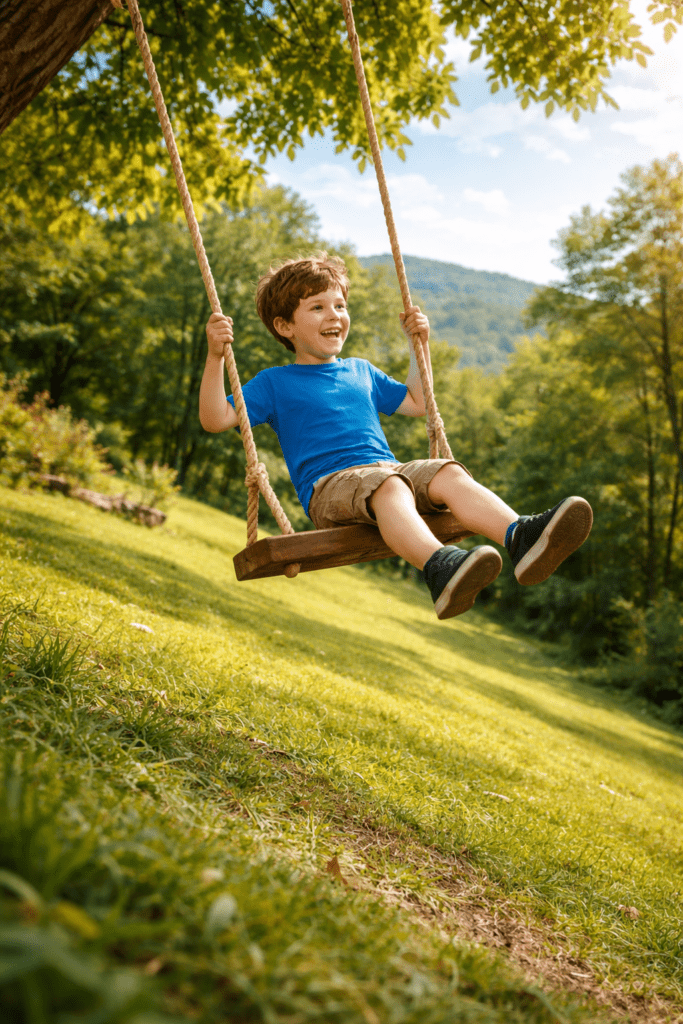
2. Uneven or Sloped Ground
- Measure from the lowest point
- Add 2–4 inches extra clearance
- Prevents dragging mid-swing
3. Hard Surfaces (Concrete, Decks)
- Keep it closer to 16–20 inches
- Lower height reduces fall risk
- Consider adding padding or rubber mats
4. Dirt or High-Traffic Areas
- Go slightly higher (20–24 inches)
- Expect ground wear over time
- You’ll likely form a shallow “swing trench”
Different Swing Types = Different Heights
Classic Board Swing
- Best at 18–24 inches
- Easy to mount/dismount
- Most forgiving setup
Tire Swing
- Slightly higher (20–28 inches)
- Needs clearance for rotation
- Watch for uneven weight distribution

Bucket/Toddler Swing
- Lower (12–18 inches)
- Focus on safety and stability
- Minimal swinging arc
Trade-Offs You Should Know
Lower Swing (12–18 inches)
Pros:
- Safer for kids
- Easy to get on/off
- Less intimidating
Cons:
- Reduced swing arc
- Feet drag more easily
Higher Swing (20–30 inches)
Pros:
- Better motion and momentum
- Less ground interference
- More “fun factor”
Cons:
- Harder to mount
- Higher fall risk
- Requires more supervision
Common Mistakes (That Cause Problems Later)
1. Setting It Too Low Initially
People overcompensate for safety and end up with a swing that barely moves. See more tips on how to hang a tree swing properly.
2. Ignoring Ground Changes
Grass wears down. Dirt compacts. What starts at 18 inches can become 14 inches over time.
3. Not Testing With Real Weight
A swing that looks perfect empty can drop several inches once someone sits on it.
4. Using Fixed Rope Without Adjustment
Always leave room to tweak height. This is where adjustable straps shine.
Setup Tips (That Save You Headaches)
If you want a cleaner install with fewer adjustments:
- Use tree swing straps instead of rope
- Look for multiple loops for height adjustment
- Choose straps that protect bark (important for long-term tree health)

Printable Checklist: Tree Swing Height Setup
✔ Seat is 16–24 inches from ground
✔ Feet can lightly touch when seated
✔ No dragging during full swing arc
✔ Clearance from obstacles (6–8 ft radius)
✔ Height adjusted for ground slope
✔ Tested with actual user weight
✔ Easy to get on/off without jumping
Time to Complete
- Basic setup: 20–30 minutes
- Fine-tuning height: 10–15 minutes
- Total time: ~45 minutes
If you’re dialing it in carefully (which you should), plan for about an hour.
Frequently Asked Questions
How high should a swing be for adults?
Aim for 18–24 inches, but lean toward the higher end if you want better motion and longer leg clearance.
Should a swing touch the ground?
No. It should come close, but not drag during normal swinging.
What if my swing keeps digging into the dirt?
Raise it 2–3 inches or add ground cover like mulch to stabilize the area.
Is higher always better for fun?
Not necessarily. There’s a tipping point where height increases risk more than enjoyment.
How far should a swing be from the tree trunk?
At least 3–5 feet horizontally, depending on rope length and swing arc.
Resources
Tree Safety & Installation Guidance
- International Society of Arboriculture Visit ISA Tree Care Resources
Playground Safety Recommendations
- U.S. Consumer Product Safety Commission Public Playground Safety Handbook (CPSC)
Tree Health & Maintenance Tips
- Arbor Day Foundation Tree Care & Maintenance Guide
Final Thoughts
If you take one thing away, it’s this: the “perfect” swing height isn’t a fixed number—it’s a feel.
Start a little high, test it, and adjust until it feels natural. When your feet can brush the ground, your motion feels smooth, and you’re not thinking about it anymore—you’ve nailed it.
Don’t rush this part. A 10-minute adjustment now saves you months of annoyance later. And once it’s dialed in, you’ll know immediately—it just feels right.