I’ve helped a lot of people set up backyard shade and outdoor setups, and swings come up more often than you’d think. It looks simple—find a sturdy branch, throw a rope over it, and you’re done. But this is one of those projects where a quick guess can turn into a snapped branch, a broken swing, or worse.
If you want this done right, you need to think like someone who’s putting weight and motion onto a living structure—not just hanging a decoration.
Let’s walk through how to tell if your tree branch can actually support a swing, and where people usually get it wrong.
The Reality: It’s Not Just About Weight
Most people ask: “Can this branch hold my weight?”
That’s the wrong question.
You need to ask:
- Can it handle dynamic weight (swinging motion)?
- Can it handle repeated stress over time?
- Is the tree itself healthy enough to support it?
A 150 lb person swinging can easily create 300–500 lbs of force at peak motion. Add a second person or aggressive swinging, and you’re pushing that even higher.
The 5 Things I Always Check First
1. Branch Diameter (Non-Negotiable)
This is your starting filter.
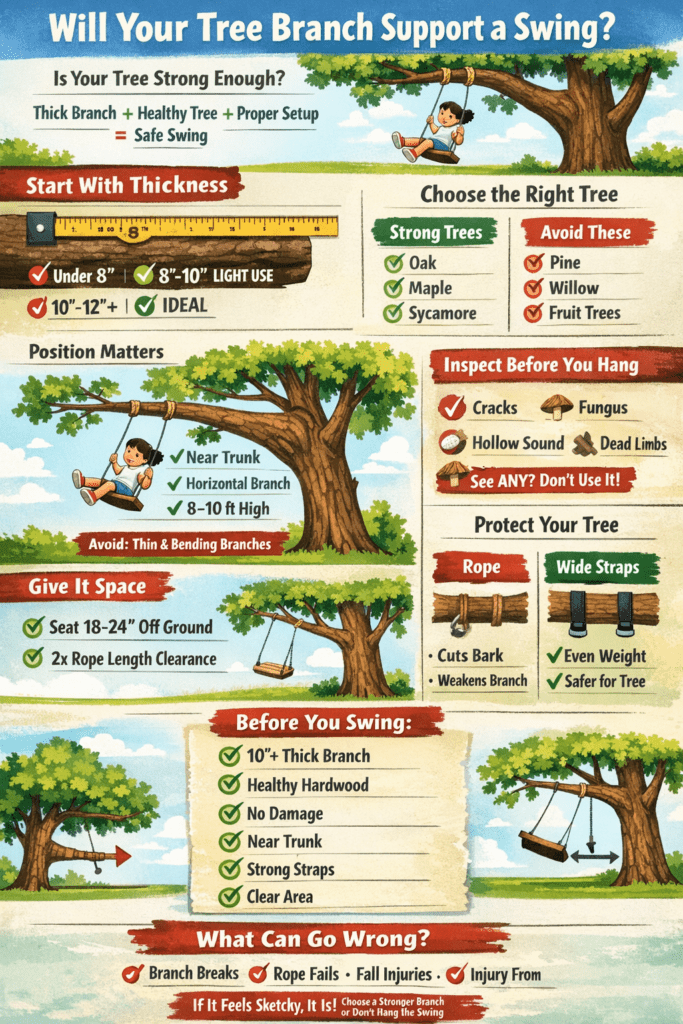
- Minimum: 8 inches thick (about the size of a large dinner plate)
- Ideal: 10–12+ inches for adults or multiple users
If it’s thinner than that, don’t try to “make it work.” That’s where failures happen.
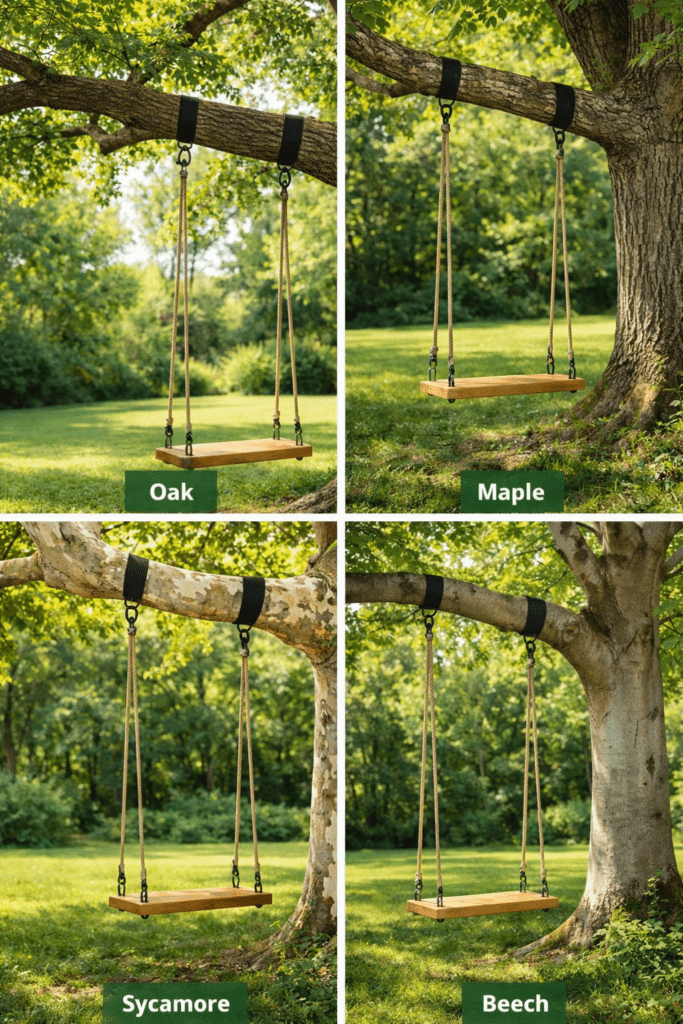
2. Tree Species Matters More Than You Think
Some trees are built for strength. Others are not.
Best trees for swings:
- Oak
- Maple
- Sycamore
- Beech
Avoid if possible:
- Pine (softwood, flexible)
- Willow (weak and prone to splitting)
- Fruit trees (branches often brittle)
If your tree bends easily in the wind, that’s a warning sign.
3. Branch Angle and Position
You want a branch that:
- Extends mostly horizontal
- Is at least 8–10 feet off the ground
- Is located closer to the trunk (not at the outer edge)
The further out you go, the weaker the branch becomes. I’ve seen people hang swings near the tip—that’s asking for a snap.
4. Tree Health Check (Quick but Critical)
Take 2 minutes and look for:
- Cracks in the bark
- Dead limbs nearby
- Fungus or rot
- Hollow sounds when tapped
If anything looks questionable, don’t ignore it. A compromised branch can fail suddenly—even if it looks strong.
5. Movement Test (Simple but Effective)
Before installing anything:
- Pull down hard on the branch
- Bounce your body weight slightly
If it creaks, cracks, or flexes too much, walk away.
Rope vs Strap: Don’t Damage the Tree
This is where a lot of setups go wrong long-term. Using raw rope directly on the branch can:
- Cut into bark
- Cause long-term damage
- Weaken the branch over time
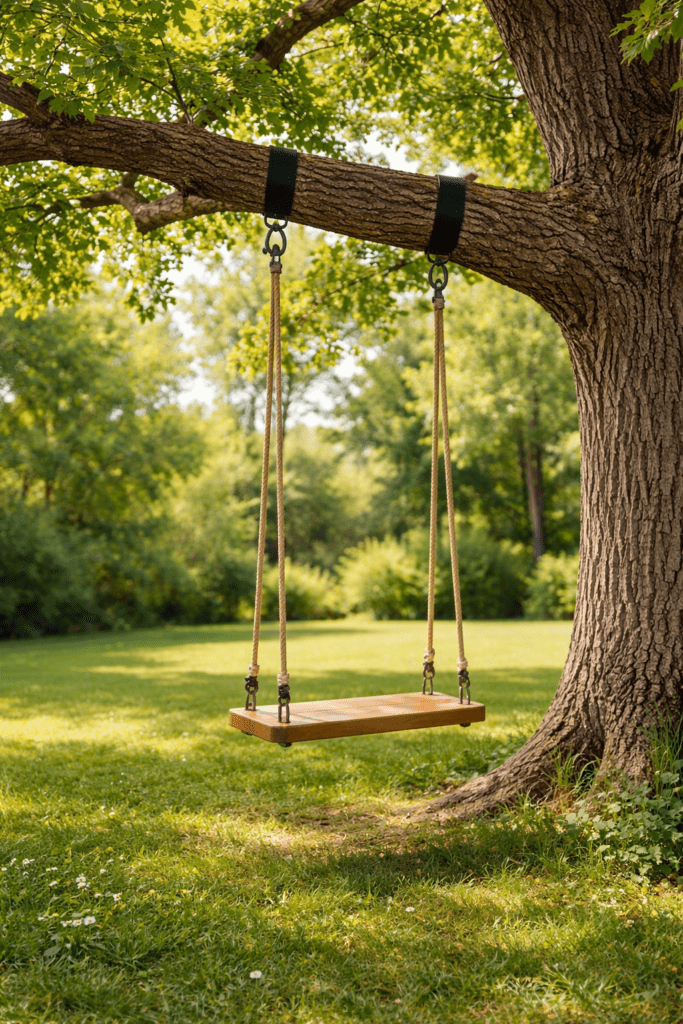
A better option is a tree swing strap system, which distributes weight more evenly and protects the bark.
Height and Clearance (Often Overlooked)
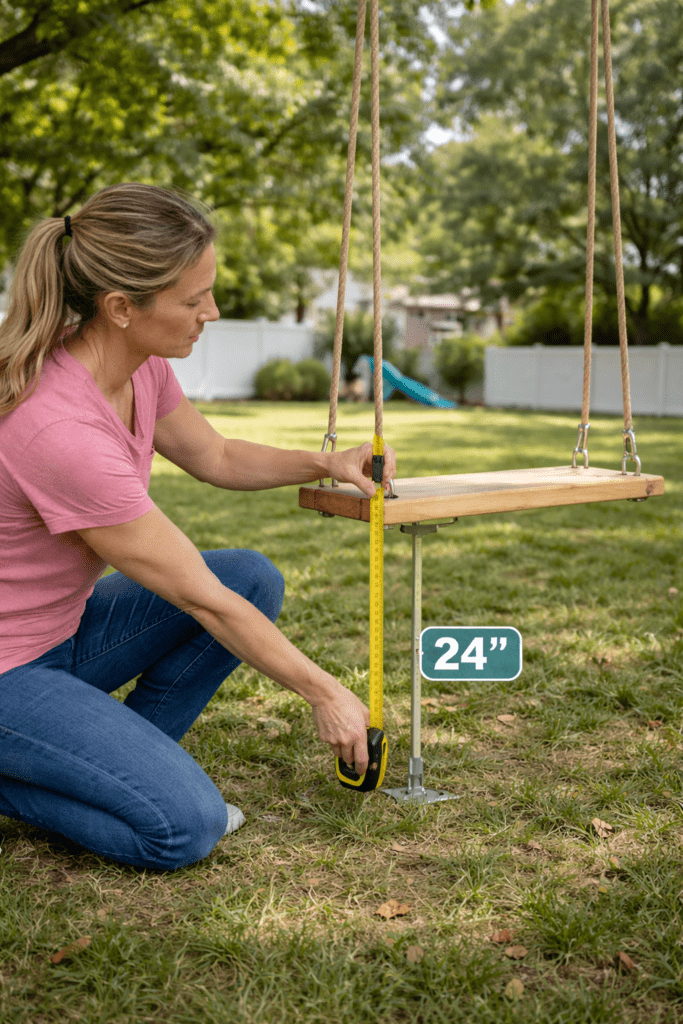
You need enough room for safe swinging:
- Seat height: 18–24 inches off the ground
- Clearance in front/back: At least 2x the height of the rope
- No obstacles nearby: fences, trunks, rocks
You want flexibility and safety, not a cramped setup.
Trade-Offs and Risks You Should Know
Let’s be honest—this isn’t risk-free.
What Can Go Wrong
- Branch failure under dynamic load
- Rope wear causing sudden drop
- Tree damage over time
- Ground impact injuries
How to Reduce Risk
- Oversize everything (branch, rope, hardware)
- Inspect regularly
- Limit aggressive swinging
- Replace worn materials early
Realistic Expectations
A properly installed swing:
- Will feel solid and quiet
- Should not cause visible bark damage
- Should last multiple seasons with maintenance
A poorly installed swing:
- Starts creaking within weeks
- Leaves grooves in the bark
- Feels unstable or “springy”
If it feels sketchy, it probably is.
Time to Complete
- Inspection: 10–15 minutes
- Installation: 20–40 minutes
- Safety check: 5 minutes
Total: ~30–60 minutes
Product Recommendations (Practical Picks)
Instead of shopping for random products, focus on features:
Must-Have Features
- Wide tree straps (2–4 inches)
- Weight rating: 500–1000+ lbs
- Heavy-duty carabiners
- UV-resistant materials
- Use the Tree Strap Calculator

Printable Checklist
Before You Hang Your Swing:
✔ Branch is at least 8–10 inches thick
✔ Tree is hardwood (oak, maple, etc.)
✔ Branch is healthy (no cracks, rot, fungus)
✔ Positioned near trunk, not the tip
✔ Height allows safe clearance
✔ Using wide straps (not bare rope)
✔ Tested branch with body weight
✔ Area below is clear and safe
Frequently Asked Questions
How much weight can a tree branch hold?
It depends on species, diameter, and health—but a safe guideline is to assume dynamic forces can double or triple your body weight.
Can I hang a swing from a small tree?
Not safely for adults. Smaller trees don’t have the structural strength or root stability needed.
Are straps better than rope?
Yes. Straps distribute weight and protect the tree. Rope can damage bark and weaken the branch over time.
How often should I check the swing?
At least once a month, and after storms. Look for wear, bark damage, and hardware fatigue.
What’s the safest type of swing setup?
A wide strap system with heavy-duty hardware on a thick hardwood branch positioned near the trunk.
Resources for More Information
International Society of Arboriculture (ISA)
Tree care & safety guidelines (official site):
👉 Visit ISA Tree Care Resources
- ISA provides professional standards, research, and best management practices for tree care.
- Their guidance includes tree risk assessment, pruning standards, and safety practices used by certified arborists.
U.S. Consumer Product Safety Commission (CPSC)
Playground safety standards handbook:
👉 View CPSC Playground Safety Handbook
- This handbook outlines safety guidelines for playground equipment, including swings.
- It’s designed to help reduce injuries by providing recommendations for installation, maintenance, and safe use.
Arbor Day Foundation
Tree health & maintenance resources:
👉 https://www.arborday.org/trees/
- This site offers practical guidance on tree care, planting, and long-term health maintenance from a trusted nonprofit organization.
Final Thoughts
If you take one thing from this: don’t guess—verify.
A swing is only as safe as the branch holding it, and the biggest mistakes come from rushing or underestimating the forces involved. When you oversize the branch, use proper straps, and give yourself enough clearance, you end up with something that feels solid, safe, and actually enjoyable.
Do it right once, and you won’t have to worry every time someone hops on the swing.