There’s something about a squeaky tree swing that instantly ruins the experience. You go from peaceful backyard vibes to creeeeak… creak… creak with every swing.
I’ve dealt with this a lot, and here’s the truth: a squeak isn’t random—it’s your setup telling you something is rubbing, drying out, or wearing down. Ignore it long enough, and it can turn into real damage (or worse, a failure point).
The good news? Most squeaks are quick fixes if you know where to look.
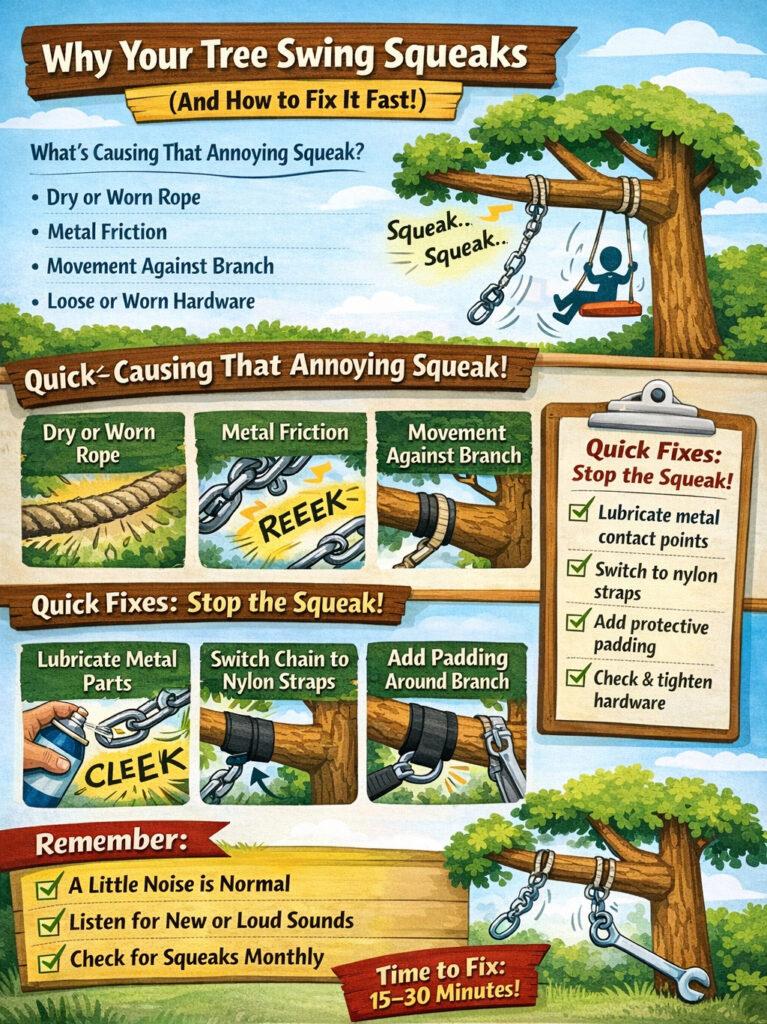
What Causes a Tree Swing to Squeak?
1. Friction Between Metal Parts
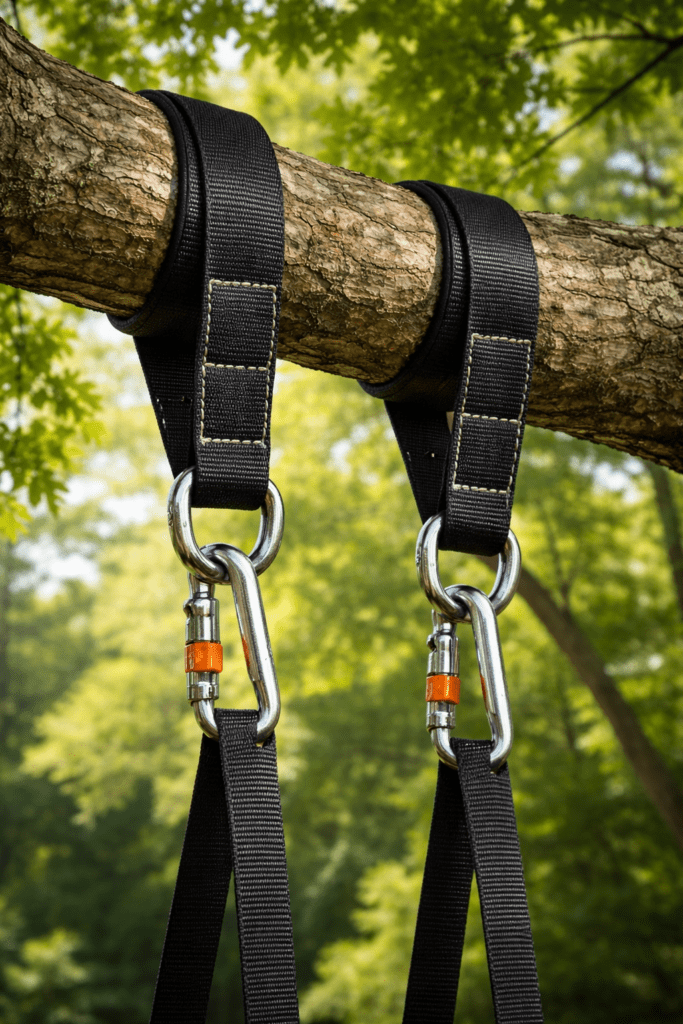
If your swing uses:
- Carabiners
- Chains
- Metal hooks
You’ve got metal-on-metal contact. Over time, that friction creates noise—especially if it’s dry or slightly worn.
What it sounds like:
High-pitched squeak with each swing motion
2. Dry Rope or Straps
Rope fibers and straps can dry out, especially in sun-heavy climates. When that happens:
- Fibers stiffen
- Movement creates rubbing
- You get a lower, creaky squeak
3. Movement Against the Tree Bark
Your straps or rope are constantly shifting slightly as the swing moves. That rubbing against bark—especially rough bark—can create noise. This is super common and often overlooked.
4. Worn or Loose Hardware
Bolts, connectors, or attachment points can loosen slightly over time. Even tiny amounts of play create:
- Clicking
- Squeaking
- Occasional popping sounds
This is one you don’t ignore.
5. Chain Link Friction
Chains are durable—but noisy. Each link rubbing against another under load can produce that classic playground squeak.
How to Fix It (Fast and Effectively)
Fix #1: Lubricate Metal Contact Points
Start here—it solves about 70% of squeak issues.
Use:
- Silicone spray (best all-around)
- Dry lubricant (less messy)
- Light machine oil (works, but attracts dirt)
Apply to:
- Carabiners
- Chain links
- Hooks and connectors
Time to complete: 5–10 minutes
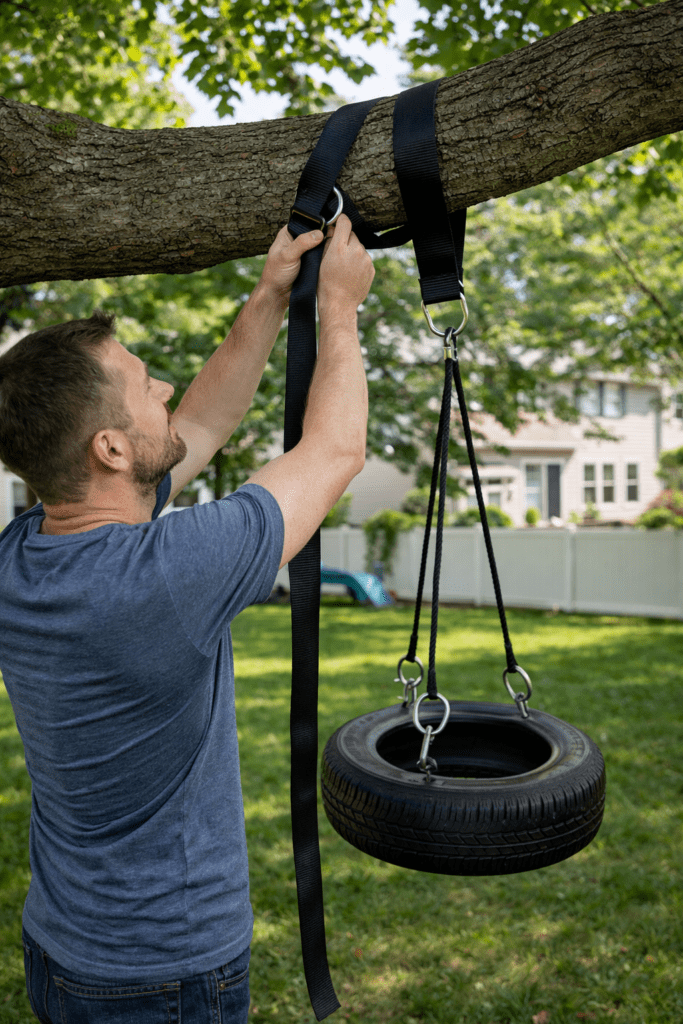
Fix #2: Upgrade to Nylon Straps Instead of Chains
Chains are tough—but noisy.
Straps:
- Reduce metal friction
- Distribute weight better
- Protect the tree
Trade-off:
- Chains last longer in harsh weather
- Straps are quieter but may need replacing sooner
Fix #3: Add Protective Padding Around the Branch
If the squeak is coming from the branch contact point, add a buffer.
Good options:
- Rubber wrap
- Tree protection pads
- Old bike inner tube
This reduces friction noise and protects the bark. 👉 More safety tips
Time to complete: 10–15 minutes
Fix #4: Tighten and Inspect Hardware
Grab a wrench or just do a manual check.
Look for:
- Loose bolts
- Worn carabiners
- Bent connectors
If something feels off, replace it. 👉 Choosing better hardware
Time to complete: 10–20 minutes
Fix #5: Replace Worn Rope
If your rope is:
- Fraying
- Stiff
- Making noise under tension
It’s time. Fresh rope = smoother movement and less noise.
Real-World Expectations (Don’t Skip This)
You’re not going to get a completely silent swing. That’s unrealistic.
What you can expect:
- Occasional minor noise = normal
- Loud, repetitive squeaking = fixable
- Sudden new noise = investigate immediately
Think of it like your car—small sounds are fine, but new or loud ones mean something changed.
Trade-Offs to Consider
| Option | Pros | Cons |
|---|---|---|
| Lubrication | Fast, cheap fix | Needs reapplication |
| Straps | Quiet, tree-friendly | Wear out faster |
| Chains | Durable | Noisy |
| Padding | Protects tree + quiet | Adds setup time |
The right setup depends on whether you prioritize quiet, longevity, or low maintenance.

Printable Checklist: Stop the Squeak
Quick Fix Checklist:
- Lubricated all metal contact points
- Checked for loose or worn hardware
- Added padding at branch contact
- Switched to straps (if using chain)
- Inspected rope for wear
- Tested swing after adjustments
Time to complete: 15–30 minutes
Frequently Asked Questions
Is a squeaky swing dangerous?
Not always—but it can be a warning sign. If the noise is coming from worn or loose parts, it can turn into a safety issue.
What’s the best lubricant to use?
Silicone spray is the safest bet. It reduces noise without damaging rope or attracting too much dirt.
Why does my swing only squeak when someone heavier uses it?
More weight = more pressure = more friction. That amplifies any weak point in the system.
Can I use WD-40?
Yes—but it’s not ideal long-term. It wears off quickly and can attract dust. Silicone spray is better.
How often should I check for squeaks?
Quick check every couple of weeks, especially during heavy use seasons.
Conclusion
A squeaky swing isn’t just annoying—it’s feedback. Most of the time, the fix is simple:
- Add lubrication
- Reduce friction
- Tighten what’s loose
- Replace what’s worn
Ignore it, and it gets worse. Address it early, and you’ll have a smoother, quieter, safer swing with minimal effort. Take 15 minutes, run through the checklist, and you’ll likely solve it the same day.