
One of the most common questions I get is surprisingly simple: “What age is actually safe for a tree swing?”
And the honest answer is—there isn’t one single age. It depends on development, setup, and supervision, not just a number.
I’ve seen toddlers swing safely with the right setup… and I’ve seen older kids on unsafe setups that made me nervous. So instead of guessing, let’s break this down the right way so you can make a confident decision.
The Short Answer (If You Just Want a Guideline)
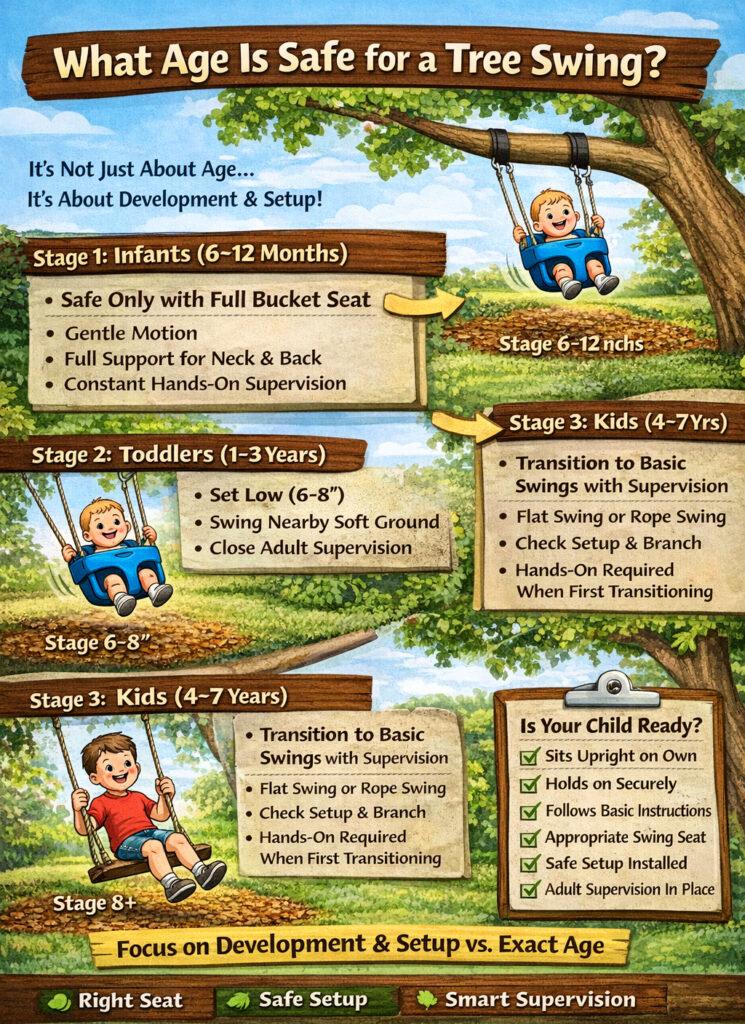
- 6–12 months: Only with full-support toddler swing + constant supervision
- 1–3 years: Safe with bucket seat + low height + controlled motion
- 4–7 years: Transition to basic swings with supervision
- 8+ years: Standard swings with proper setup
But those are just starting points. Let’s go deeper.
Stage 1: Infants (6–12 Months)
At this stage, babies lack:
- Core strength
- Neck stability (early on)
- Grip control
So if you’re using a tree swing:
- It must be a full bucket seat
- Back and head support are critical
- Movement should be minimal
👉 Setup guidance: Tree Swing Hanging Guide
Reality check:
This isn’t about “swinging”—it’s about gentle motion while supported.
Time to set up safely: 30–45 minutes
Stage 2: Toddlers (1–3 Years)

This is where tree swings really start to make sense.
Toddlers can:
- Sit upright
- Hold on (somewhat)
- Enjoy motion
But they still need:
- Containment (bucket seat)
- Low height (6–8 inches off ground)
- Close supervision
👉 Detailed setup: Safest Tree Swing Setup for Toddlers
Big risk here:
Toddlers lean, twist, and try to climb out. Your setup has to anticipate that.
Stage 3: Preschool & Early Kids (4–7 Years)
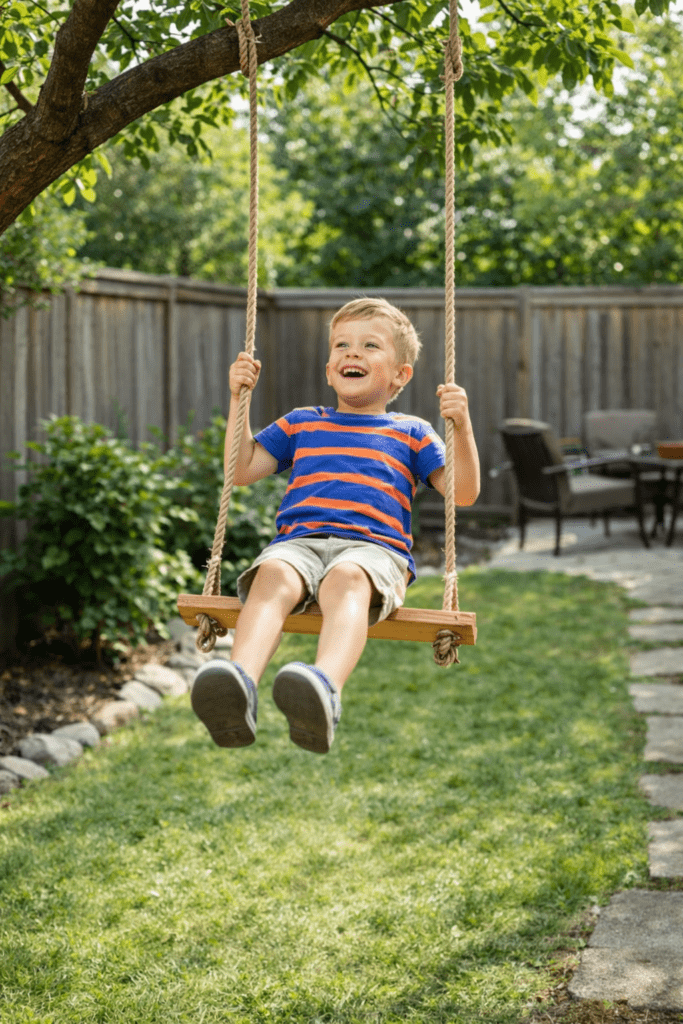
Now you can start transitioning.
Options:
- Flat swing seat
- Rope swing (with supervision)
- Tire swing (if installed correctly)
Key factors:
- Coordination improves
- Grip strength increases
- Understanding of safety gets better
But don’t rush it.
👉 Choosing the right swing type
Trade-off:
More freedom = more risk
Stage 4: Older Kids (8+ Years)
At this point, most kids can safely use:
- Standard swing seats
- Rope swings
- More dynamic setups
As long as:
- The hardware is solid
- The branch is strong
- The setup is correct
What Actually Determines “Safe” (More Than Age)
Here’s what matters more than the number:
1. Physical Development
Can they:
- Sit upright without help?
- Hold on consistently?
- Follow instructions?
If not, they’re not ready—regardless of age.
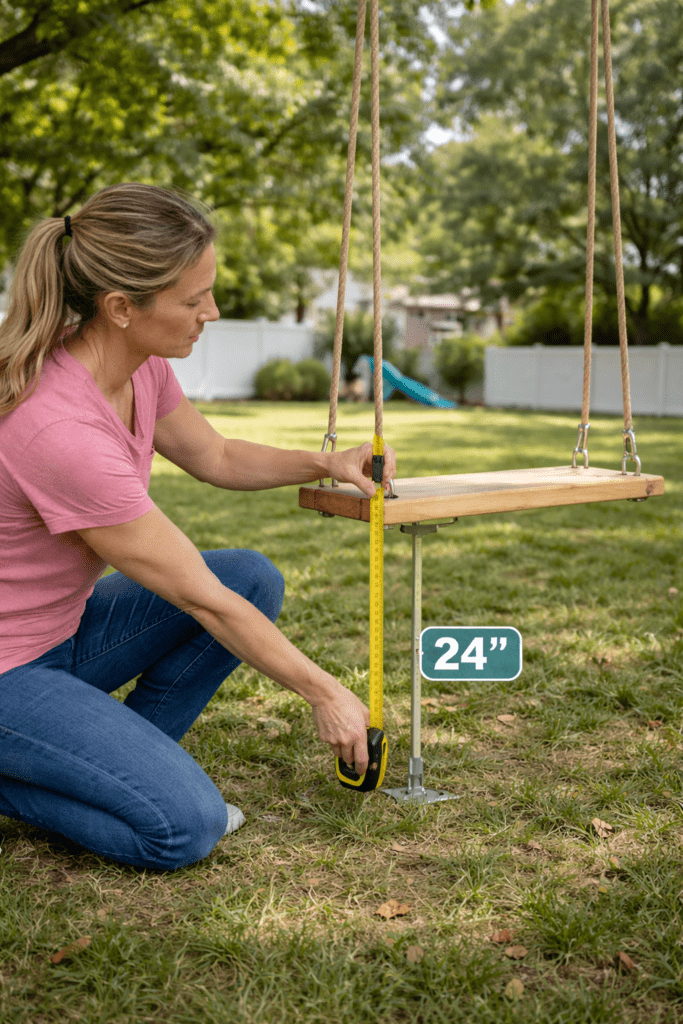
2. Swing Setup
A safe setup includes:
- Proper seat type
- Correct height
- Strong branch
- Safe spacing
A bad setup makes any age unsafe.
3. Supervision Level
- For younger kids: Hands-on supervision
- For older kids: Visual supervision
- No supervision = unnecessary risk.
Trade-Offs You Need to Think About
| Choice | Safer Option | Trade-Off |
|---|---|---|
| Seat type | Bucket seat | Less freedom |
| Height | Lower swing | Less excitement |
| Motion | Gentle | Less fun initially |
| Independence | Supervised | Less autonomy |
This is where most people go wrong—they prioritize fun too early instead of safety.
Realistic Expectations
Let’s keep this grounded.
- Kids outgrow swing types quickly
- You’ll likely upgrade setups over time
- Occasional bumps and minor falls happen
Your goal isn’t zero risk—it’s managed risk.

Printable Checklist: Is Your Child Ready?
Readiness Checklist:
- Can sit upright without assistance
- Can hold on securely
- Understands basic instructions
- Uses age-appropriate swing seat
- Swing height is appropriate
- Area is clear of obstacles
- Adult supervision is in place
Time to evaluate/setup: 15–30 minutes
Frequently Asked Questions
What is the youngest safe age for a tree swing?
Around 6 months with proper support and supervision. Earlier than that is not recommended.
Can a 2-year-old use a regular swing?
Not safely. A bucket seat is still the better choice at that age.
When can kids use a rope swing?
Typically around 5–7 years old, depending on coordination and strength.
Is height or seat type more important?
Seat type. A proper seat prevents falls—height only reduces impact.
Should I upgrade the swing as my child grows?
Yes—and sooner than you think. Kids outgrow toddler setups quickly.
Conclusion
Age gives you a rough guideline—but it’s not the deciding factor. What actually makes a tree swing safe is:
- The right seat
- A solid setup
- Proper supervision
- Matching the swing to your child’s development
If you focus on those, you’ll make better decisions than just following an age chart. Start safe, adjust as your child grows, and you’ll end up with a setup that’s both fun and dependable.