Old-fashioned tree swings provide an easy, inexpensive way to add more fun to your backyard. They can be simple to make and last many years, if you start with the right materials.
You may even have all of the building materials and tools that you need, in which case your DIY tree swing project will be free! All you need is a tall, sturdy tree branch.
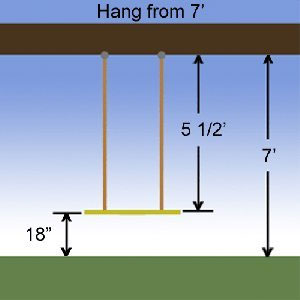
The image on the left shows the dimensions required to hand a wooden tree swing. The example shows a tree branch which is 7 feet off of the ground.
The seat should hang approximately 18″ above the ground. You can adjust this height, depending on the height of your tree branch and whether kids or adults will use the swing.
How to Tie Tree Swing Knots:
Possibly the biggest question that people have about building a tree swing is how to tie strong and secure knots in the rope. This task is also a simple one. Lowes demonstrates how to do it in the video below:
Wooden Tree Swing Kit: Pros & Cons
1. Classic Look
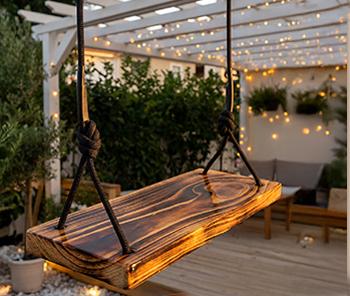
- Natural wood + rope = high emotional appeal
- Works great for:
- backyard aesthetics
- photos
- relaxed seating
👉 This is why these swings are popular—they feel right, not just function.
2. Strong Weight Capacity
- Typically rated around 500 lbs
- Can handle:
- kids
- adults
- occasional shared use
👉 That’s solid for a simple swing.
3. Adjustable Rope Setup
- Rope length can be adjusted for different branch heights
- Works across a variety of backyard trees
👉 Good flexibility, especially for beginners.
4. Comfortable Seat Size
- Around 24″ wide plank seat
- Better than narrow plastic swings
👉 This is more of a “sit and relax” swing vs just play.
5. All-in-One Simplicity
- Includes rope + seat
- Minimal parts
👉 Easy entry point for someone who doesn’t want to overthink it.
❌ Cons (Where It Falls Short)
1. Rope Can Damage Your Tree
This is the biggest issue.
- Rope concentrates pressure in one line
- Over time → cuts into bark
👉 Especially bad for: long-term installs and/or heavy use. However, you can avoid this issue by using the included extension straps or attaching a tree strap hanging kit.
2. Knot-Based Setup (User Error Risk)
- Requires tying and adjusting knots
- Can lead to:
- uneven swing
- slipping
- instability
👉 This is where most setups go wrong.
3. Less Stable Than Strap Systems
Compared to modern straps:
- more sway
- more twisting
- harder to keep level
👉 Noticeable with kids or frequent use.
4. Wood Requires Maintenance
- Needs sealing or protection
- Can:
- crack
- warp
- fade in sun/moisture
👉 Realistically, expect maintenance if left outdoors where it’s exposed to weather.
5. Limited for High Branches
- Rope gets harder to manage at height
- More setup effort
👉 Straps are significantly easier here.
💰 Cost Comparison: Buy vs Build
This is where things get interesting.
🛒 Buying This Swing
Typical price range:
- Budget versions: $35–$65
- Mid-range (better finish): $60–$100
- Premium handmade: $100–$150+
👉 The JMZOO-style swing usually lands around:
$40–$70
🔨 Building It Yourself
Typical DIY cost:
| Component | Cost |
|---|---|
| Wood plank | $10–$25 |
| Rope (quality) | $15–$40 |
| Sanding/sealant | $10–$25 |
| Hardware (optional) | $10–$20 |
👉 Total:
$45–$100
⚖️ Honest Comparison
Buying (JMZOO-style swing)
Pros:
- Faster
- Consistent quality
- No tools needed
Cons:
- Less control over materials
- Basic finish
DIY Build
Pros:
- Customize size, wood, rope
- Can make higher-quality version
- More durable if done right
Cons:
- Takes time (1–3 hours)
- Requires tools
- Easy to make mistakes
My Expert Take
Here’s the real answer most people don’t say:
👉 Buying this type of swing is NOT cheaper than DIY—it’s just easier.
When buying makes sense:
- you want fast setup
- you don’t want to mess with tools
- you’re okay with “good enough” quality
When DIY makes more sense:
- you want better durability
- you care about finish (sealed wood)
- you want a premium look
🔥 Bottom Line
This swing is a good fit if you want:
- A simple, classic setup
- Aesthetics
- Something quick and easy
But it’s not ideal if you want:
- Zero maintenance
- Maximum tree protection
- Long-term durability