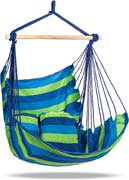
If you’ve got a swing set up in your yard, it’s natural to wonder: Can I just leave this thing up all year and forget about it?
Short answer? Yes… but only if you set it up and maintain it the right way.
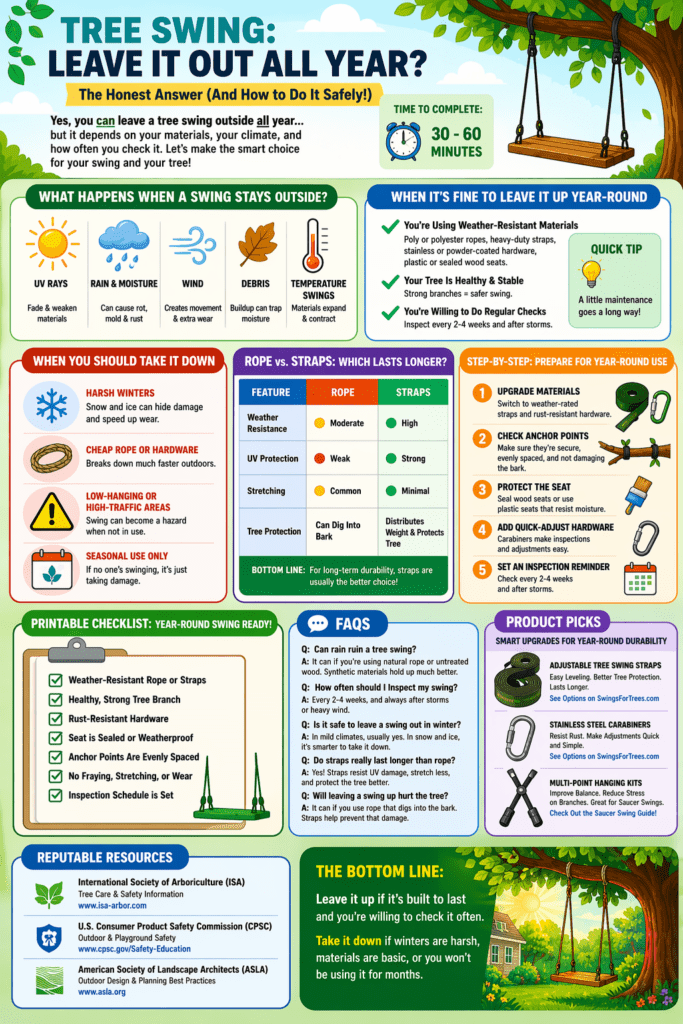
I’ve seen swings last for years with zero issues—and I’ve also seen perfectly good setups fail in a single winter. The difference always comes down to materials, weather exposure, and how often someone checks things.
Let’s break it down so you can decide what makes sense for your setup.
What Actually Happens When a Swing Stays Outside?
A tree swing lives in a tough environment. It’s exposed to:
- ☀️ UV rays (sun damage)
- 🌧️ Rain and moisture
- 🌬️ Wind movement
- 🍂 Debris buildup
- 🌡️ Temperature swings
Over time, these factors don’t just age your swing—they can compromise safety if ignored.
When It’s Fine to Leave Your Swing Up
You can safely leave your swing outside year-round if all of these are true:
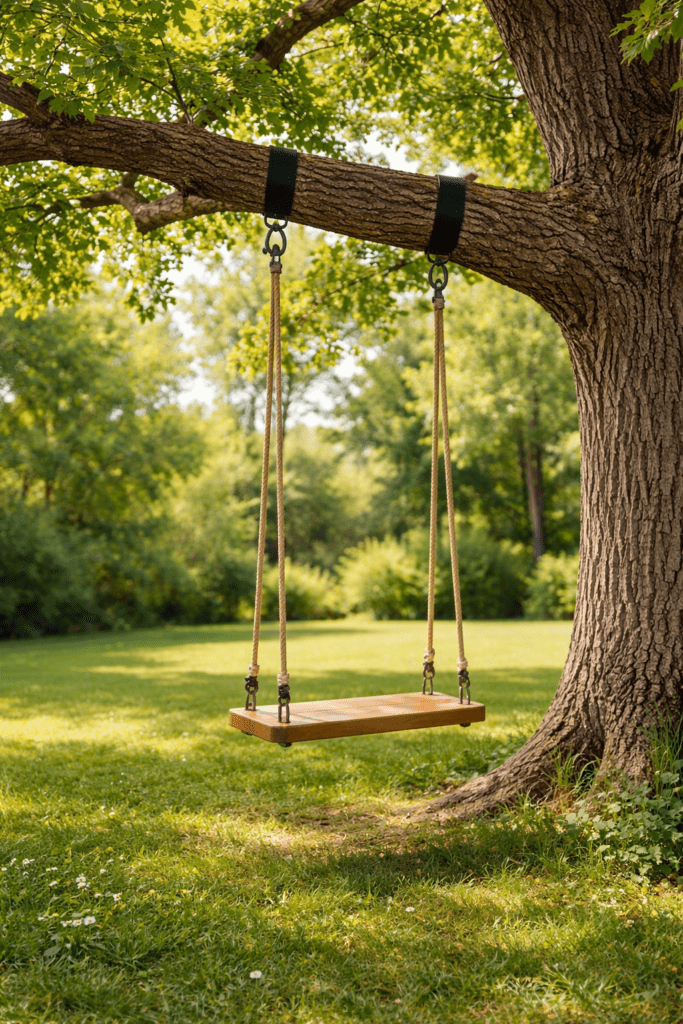
✔ You’re Using Weather-Resistant Materials
- Polypropylene or polyester ropes (not natural fiber)
- Heavy-duty tree straps (preferred)
- Powder-coated or stainless hardware
- Plastic or sealed wood seats
👉 If you’re not sure about your setup, start here:
https://www.swingsfortrees.com/how-to-hang-a-tree-swing/
✔ Your Tree Is Healthy and Stable
Trees don’t just hold swings—they change over time. Branches can weaken, especially after storms.
👉 Review your safety basics here:
https://www.swingsfortrees.com/how-to-test-a-tree-branch-for-a-swing/
✔ You’re Willing to Do Occasional Checks
This is the part most people skip—and it’s where problems start.
At minimum:
- Check straps/ropes every few weeks
- Inspect after storms
- Look for fraying, stretching, or shifting
When You Should Take It Down
There are situations where leaving it up isn’t worth the risk:
❌ Harsh Winters (Snow/Ice)
Moisture + freezing = faster wear and hidden damage.
❌ Cheap Rope or Hardware
Lower-quality materials degrade quickly outdoors.
❌ Low-Hanging or High-Traffic Areas
Swings can become hazards when not in use (wind movement, collisions).
❌ Seasonal Use Only
If no one’s using it for months, it’s just taking damage for no reason.
Rope vs Straps (Year-Round Durability)
This matters more than people think.
| Feature | Rope ❌ | Straps ✅ |
|---|---|---|
| Weather Resistance | Moderate | High |
| UV Protection | Weak | Strong |
| Stretching | Common | Minimal |
| Tree Protection | Can dig in | Distributes weight |
👉 For long-term setups, straps are almost always the better call:
https://www.swingsfortrees.com/tree-swing-hanging-kit/
Real-World Trade-Offs
Let’s be honest about what you’re choosing:
Leaving It Up Year-Round
Pros:
- No setup each season
- Always ready to use
- Less hassle
Cons:
- Faster wear
- More frequent inspections
- Higher chance of unnoticed damage
Taking It Down Seasonally
Pros:
- Longer lifespan
- Better safety control
- Less exposure to elements
Cons:
- Setup time each season
- Storage needed
Step-by-Step: Preparing a Swing for Year-Round Use
Time to complete: 30–60 minutes
- Upgrade your materials
- Replace rope with weather-rated straps
- Check your anchor points
- Ensure even spacing and no bark damage
- Seal or protect the seat
- Apply outdoor wood sealant if needed
- Add quick-adjust hardware
- Carabiners make future checks easier
- Set a reminder for inspections
- Every 2–4 weeks

Printable Checklist
Year-Round Swing Setup Checklist
✔ Weather-resistant straps or rope
✔ Strong, healthy branch
✔ Rust-resistant hardware
✔ Seat protected from moisture
✔ Anchor points evenly spaced
✔ No visible wear or fraying
✔ Inspection schedule set
Product Recommendations
If you want a “set it and forget it” setup, these upgrades make a huge difference:
- Adjustable tree swing straps
→ Faster leveling, better durability - Stainless steel carabiners
→ Resist rust and make adjustments easy - Multi-point hanging kits (for saucer swings)
→ Improve balance and reduce stress on one point
FAQs
Can rain ruin a tree swing?
Yes—especially if you’re using untreated wood or natural fiber rope. Synthetic materials hold up much better.
How often should I inspect a swing left outside?
Every 2–4 weeks, and always after storms or heavy wind.
Is it safe to leave a swing out in winter?
It depends. In mild climates, usually yes. In snow/ice conditions, it’s better to remove it.
Do straps last longer than rope outdoors?
In most cases, yes. They resist UV damage and stretching better.
Will leaving a swing up damage the tree?
It can if you’re using rope that digs into bark. Straps reduce this risk significantly
Conclusion
You can leave a tree swing out all year—but it’s not a passive decision. If you use the right materials, check it regularly, and understand how weather affects your setup, it can be a safe and low-maintenance option.
But if you’re using basic rope, dealing with harsh winters, or don’t plan to inspect it often, taking it down seasonally is the smarter move.
Think of it this way:
The less effort you want later, the more you need to set it up right now.